PIC-Based Dual-Channel Virtual Oscilloscope
Approx construction cost US$53
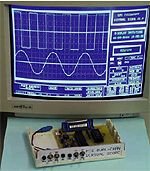
Mid-range is perhaps a reasonable description of this design. At one end of the scale of EPE virtual oscilloscope designs is the simple Analogue Input Waveform Display computer interface used with the Teach-In 2000 series. At the other end is the sophisticated and versatile EPE Virtual Scope of Jan/Feb ’98.
Sitting between these two designs is the PIC V-Scope described here. It provides waveform display of two signals simultaneously at rates much higher than the TI design offers, although lower than V-Scope can handle. It is considerably easier to construct than V-Scope. With care, even less-experienced hobbyists should stand an excellent chance of constructing it successfully.
Specifications
- PIC microcontroller performs analogue-to-digital conversion, buffer memory storage/recall and o) output to PC-compatible computer for display
- Computer control of all PIC program modes
- Selectable dual channel or either channel individually
- Two signal display modes, analogue and digital
- Waveform gain switchable for x1 or x10
- Input impedance 10k ohms and 100k ohms
- Maximum input signal level before display clipping 5V pk-pk, or 50V if x10 scope probe is used
- Input switchable for AC or DC
- Waveform synchronisation (sync) selectable on/off by channel, with controllable trigger levels
- Waveform shift vertically for each channel
- Frequency range: nominally audio, but extending well below 1Hz and above 10kHz
- Frequency counting and waveform amplitude monitoring for each channel, selectable on/off
- Frequency count accuracy presettable from screen for fine tuning, with automatic recall of settings on start-up
- Three sampling modes: via 2Kbyte or 32Kbyte buffer memory, or immediate
- Screen grid on/off
- Waveform display hold on/off
- Waveform data output to disk, on demand or automatic, date and time stamped
- Waveform data input from disk files
- Disk files selectable by mouse from on-screen directory
- Operation via parallel printer port
- Port address selectable on-screen, with automatic recall on start-up
- Screen dump to printer, date and time stamped
- All functions mouse-selectable
- Additional keyboard control for some options
More details on this construction project can be found in the October 2000 issue of EPE Online, the world's first web-delivered electronics and computing hobbyist magazine.
PURCHASE this issue or peruse more Projects